


Director's Vision
Shanghai Follies is a fictional story rooted in fact, exploring universal themes: sibling rivalry and conflicting desires. Two sisters, both desperate for independence, want freedom in very different ways. Mina dreams of life beyond the circus, torn by loyalty to her family. Neesa doesn’t want her sister to leave — but she also wants to run the show.
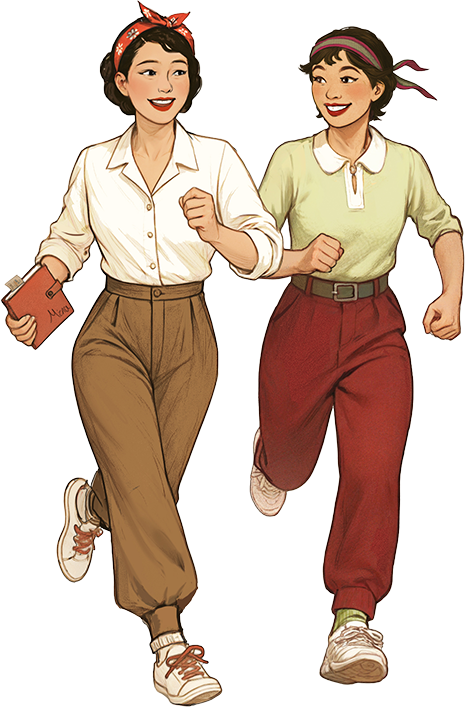
This would be complicated enough in any family — but their family happens to be a Chinese circus troupe touring the world in 1932, against the backdrop of the Great Depression, the fading days of vaudeville, the rise of fascism, and rampant Sinophobia. Many of these forces still resonate today. This film is personal. Shanghai Follies draws from the real-life story of my great-grandfather Long Tack Sam, my Austrian great-grandmother, and their mixed-race daughters — my grandmother Mina and her precocious sister Neesa. My documentary The Magical Life of Long Tack Sam unearthed their world, but left me with even more longing to imagine what could never be fully known — their life together. Mina, the eldest, is a proto-feminist athlete with ambitions outside the show. Neesa, the younger, is impulsive and hungry for leadership, but underestimated. Both are young women ahead of their time. The circus they travel with is dazzling on stage — a place where cultures collide, genders blur, and audiences glimpse something magical. Behind the curtain, though, it’s all hard work, compromise, and survival.
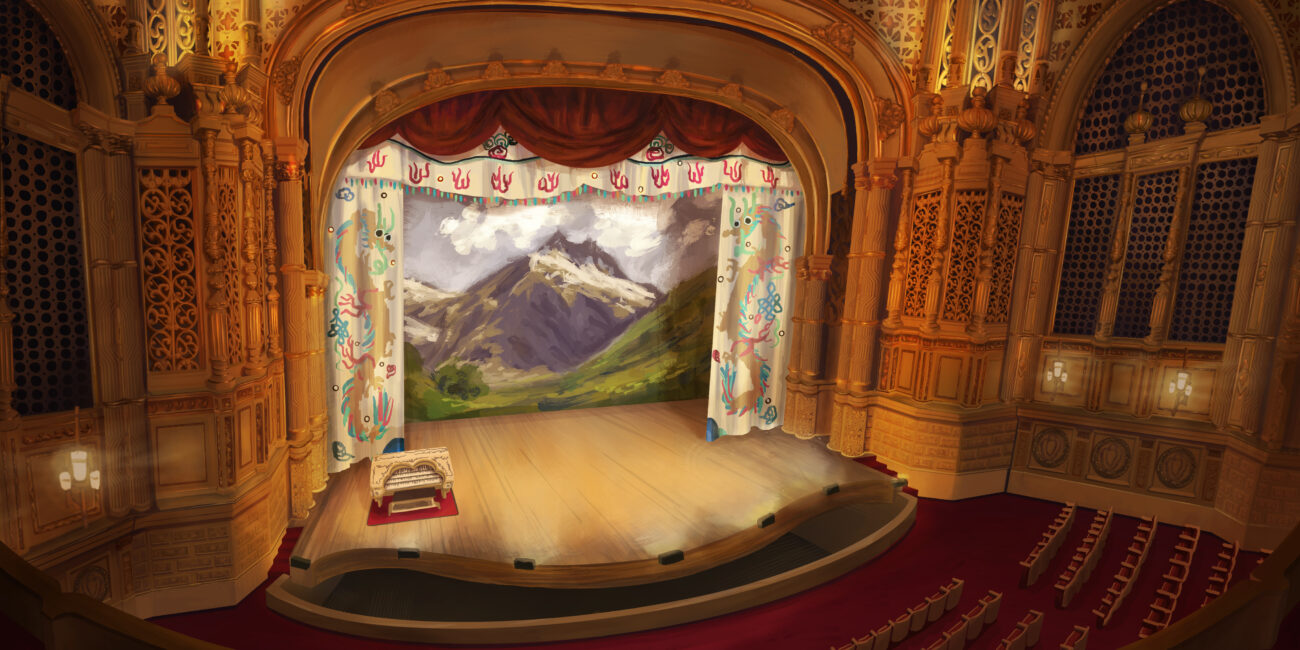
This is an animated film precisely because animation allows us to heighten the contrast between harsh reality and transcendent imagination. The world offstage is depicted in sepia — the colour of memory and fatigue. The stage is vivid Technicolor. The ghost of Neesa shifts in intensity, reflecting her grip on the living world. A hybrid of 2D and 3D animation bridges the boundary between the mundane and the magical.
The music will reference the blend of East-meets- West that was happening in the 30’s: the sultry jazz ballads of the Shanghai Divas, the Broadway hits of Irving Berlin, the traditional sounds of Chinese folk instruments played on stage.
The story’s rhythm and wit borrow from 1930s screwball comedies— a nod to the very movies that were replacing live performance.
1932 was a moment of seismic transition, when film displaced live performance, and the Depression sealed the deal. Today, we stand at a similar crossroads. Post-pandemic, live theatrical experience has become rarefied. Cinema itself is shifting form under pressure from new technologies. Vancouver, too, was and is a city of contradictions — booming construction alongside squatters in tent cities. That tension is the backdrop to a family on the verge of collapse.
This story is joyful, bittersweet, and deeply human. Through Mina and Neesa’s eyes, Shanghai Follies explores the space between life and art the courage it takes to imagine a different world, one show at a time, and the love that binds us when everything else falls apart. – Ann Marie Fleming
Writer/Director/Producer
Ann Marie Fleming
Ann Marie Fleming is a writer, director, producer, and animator whose award-winning work in animation, live-action drama, and documentary in both short and feature formats, often deals with themes of family, history and memory.
Can I Get A Witness? (2024) her latest feature, starring Sandra Oh, Keira Jang and Joel Oulette, premiered at the Toronto International Film Festival, is on the TIFF Top 10 list of Canadian films for 2024, and won numerous Leo and Vancouver Film Critic’s awards, including for Best Picture. Window Horses (2016) featuring the voices of Sandra Oh, Shoregh Agdashloo, Elliot Page and Omid Abtahi, received the Asia Pacific Screen Award for Best Animated Feature. Her animated short, Old Dog (2020) is one of the most viewed films on NFB.ca. Blue Skies (2002) won Best Canadian short at TIFF and You Take Care Now (1989) is on the TIFF List of 10 Best Canadian shorts of All Time. The Magical Life of Long Tack Sam (2003), with its then-ground-breaking work of using moving photographs, shed a light on a little known part of the Chinese diaspora – the vaudeville circus performer-through the life of her great grandfather.
She calls Vancouver, B.C. her home.