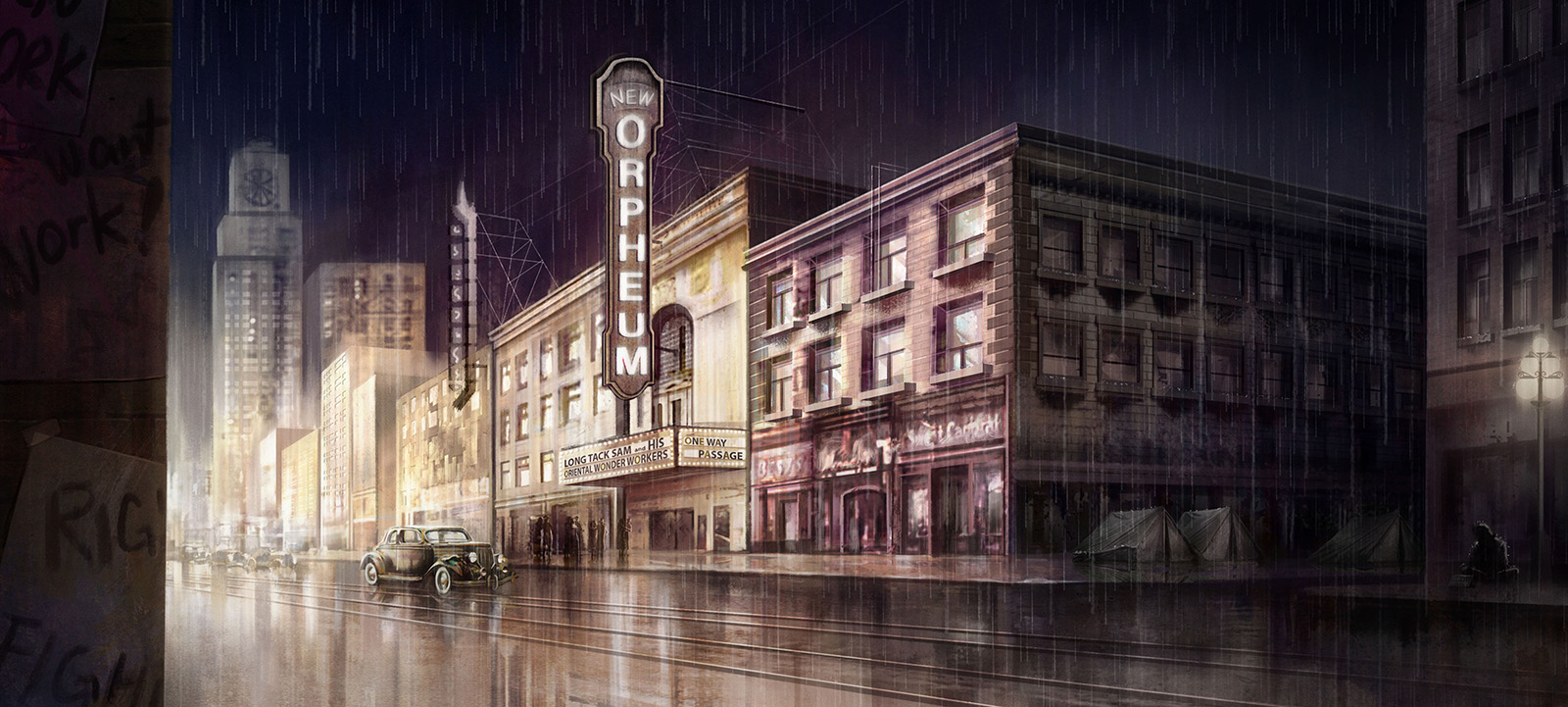
Set in Depression-era Vancouver, the backgrounds are moody and atmospheric, reflecting both the damp coastal season and the political tensions of the time — from economic collapse to rising nationalism and Sinophobia.
The character design draws inspiration from a unique blend of visual traditions: the glamour and poise of Shanghai cigarette poster girls, the earnest expressiveness of Norman Rockwell’s Americana, and the charm and clarity of of the early days of comics. This combination grounds the film in both Eastern and Western popular aesthetics of the period.
The “real world” is illustrated in stylized 2D, with a palette leaning toward sepia, grey-blue, and soft neutrals, echoing early photography and film. In stark contrast, the world of magic and performance bursts into full 3D animation, rich in saturated colour, movement, and texture — a vivid expansion of reality where artifice becomes truth.
This interplay between visual styles reflects the characters’ inner lives: their longing, resilience, grief, and joy. Animation allows the film to move between realism and metaphor — to make the invisible visible, and to show how performance becomes a radical act of reinvention. It’s an ideal medium for a story about duality, transformation, and imagination as survival.